Islam the religion
What is Islam?
The complete, honest introduction to Islam — what it is, what Muslims believe, and why 1.8 billion people call it the complete way of life.
| WHAT IS ISLAM?
The Complete Way of Life — What Islam Actually Is
Islam is the complete and final message from Allah — the one God, who has no partners, no equals, and no intermediaries. The word Islam comes from the same Arabic root as salaam, meaning peace. Islam teaches that genuine peace — with God, with oneself, and with others — follows from submission to the One who created all things.
🌍1.8 Billion
Followers worldwide — every continent, every culture
🕌~20%
of Muslims are Arab
Islam is not an Arab religion
📖7th century CE
The Qur'an — revealed, memorised, and preserved
Muslims believe that Allah sent guidance to humanity throughout history — through Adam, Abraham, Moses, Jesus, and finally Muhammad, peace be upon them all. The Qur'an — Islam's sacred scripture — is the final, preserved word of Allah, revealed to the Prophet Muhammad in Arabia in the 7th century CE.
To understand Islam, one question comes before all others: who is Allah?
Allah Has No Partners, Parents, or Children
Islam teaches that Allah is absolutely unique and unlike anything in creation. He was not born, and He does not give birth. He has no son, no daughter, no equal, and no associate. This is Tawhid — the complete oneness of God — and it is the foundation of everything in Islam. To worship Allah is to turn directly to Him, with nothing and no one in between.
Allah Was Not Created Nor Born — He Is the Eternal
Everything that exists was created — the universe, time, life itself. Allah alone is the uncreated Creator. He has always existed and will always exist. He depends on nothing, while everything in existence depends entirely on Him. The Qur'an describes Him: "Allah — there is no deity except Him, the Ever-Living, the Sustainer of existence." (Qur'an 2:255)
There Is Only One God — No Hierarchy, No Intermediaries
Islam rejects every form of polytheism without exception. There is no pantheon, no divine family, no spiritual hierarchy between human beings and God. Every person — regardless of background, language, or past — stands directly before Allah. No intermediary is needed. You can turn to Him right now, in any language, at any moment.
"˹He is˺ the Originator of the heavens and earth. How could He have children when He has no mate? He created all things and has ˹perfect˺ knowledge of everything. That is Allah - your Lord! There is no God ˹worthy of worship˺ except Him. ˹He is˺ the Creator of all things, so worship Him ˹alone˺. And He is the Maintainer of everything." Qur'an: Chapter 6, Verses 101-102
Allah is the absolute One — the all-powerful, all-knowing Creator of everything in existence. He is Al-Rahman (the Most Merciful) and Al-Raheem (the Most Compassionate). "He is closer to you than your jugular vein" Qur'an: Chapter 50, Verse 16, yet beyond all human comprehension. Islam does not ask you to imagine God as a human or a physical form — Allah is unlike anything in creation.
| ALLAH IN ISLAM
Who is Allah — And What Is Tawhid?
The central concept of Islam is Tawhid — the absolute oneness of God. There is no trinity, no pantheon, no hierarchy. Allah alone is worthy of worship, and He is unlike anything in creation.
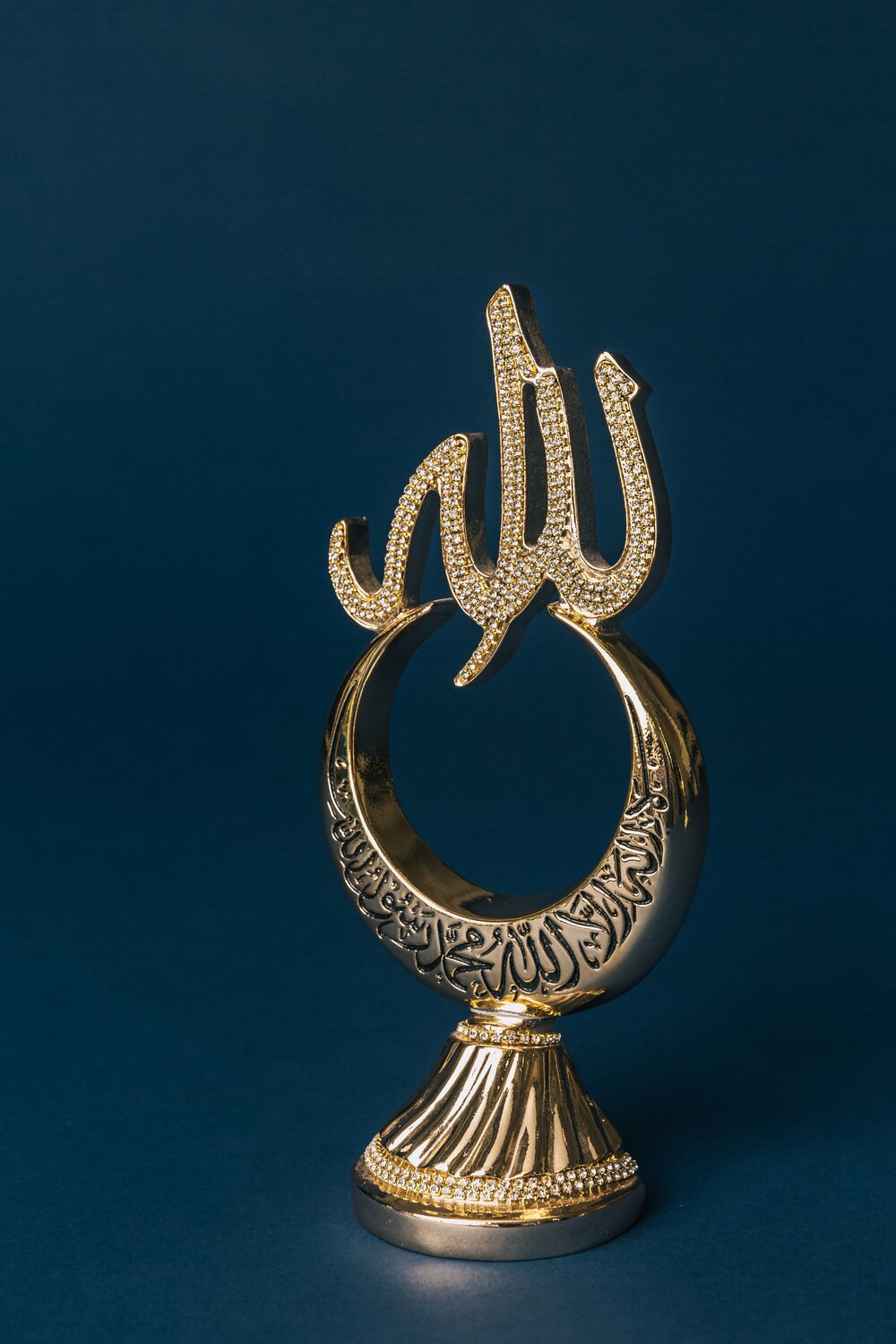
Allah has ninety-nine names in the Qur'an — each describing an aspect of His nature. Three are introduced here:
Everything in Islam rests on this single foundation. The next question it raises is the one most people already feel — is there evidence that this Creator exists?
| CREATION & SIGNS
Creation Points to Its Creator — Islam Invites You to Reflect
When we observe the world around us — the balance in nature, the complexity of life, the vastness of the universe — a natural question arises: could all of this exist without a Creator? Islam invites you to think, observe, and reason. The Qur'an addresses this directly, calling on humanity again and again to reflect on the signs around them.
"Indeed, in the creation of the heavens and earth, and the alternation of the night and the day, and the [great] ships which sail through the sea with that which benefits people, and what Allah has sent down from the heavens of rain, giving life thereby to the earth after its lifelessness and dispersing therein every [kind of] moving creature, and [His] directing of the winds and the clouds controlled between the heaven and the earth are signs for a people who use reason." Qur'an: Chapter 2, Verse 164
Muslims believe that every element of creation — from the complexity of a living cell to the vastness of the cosmos — is a sign pointing toward its Creator. This scale alone is extraordinary: trillions of galaxies, each containing billions of stars. The Qur'anic Signs page explores how the Qur'an describes the natural world and what Muslims understand these signs to mean.
Star Size Comparison 1 (HD)
Processing video...
These observations have led countless people — scientists, philosophers, and ordinary individuals from every background — to ask the same question: could all of this exist without intention behind it? Islam offers a clear and reasoned answer: everything points to a single Creator, and that Creator did not leave the searching heart without direction — He sent prophets to make the path clear, and that path remains open. → How to Convert to Islam
| ISLAMIC BELIEF
Prophets — Allah's Messengers to Humanity
Allah sent prophets to guide humanity — from Adam, the first, to Muhammad ﷺ, the last, including Abraham, Moses, Jesus, and many others (peace be upon them all). They all brought the same message:
There is only one God — and He alone is worthy of worship.
Islam teaches that the Qur'an — revealed to Muhammad ﷺ — is the final, complete, and preserved guidance from Allah for all of humanity until the Day of Judgment.
Say, ˹O believers,˺ “We believe in Allah and what has been revealed to us; and what was revealed to Abraham, Ishmael, Isaac, Jacob, and his descendants; and what was given to Moses, Jesus, and other prophets from their Lord. We make no distinction between any of them. And to Allah we all submit." Qur'an: Chapter 2, Verse 136
The message the prophets carried is not just history. It is an answer to the question you are living right now.
You Were Created With Purpose — and You Have the Freedom to Choose
We are created with intelligence, awareness, and free will. Each person has the ability to choose what to believe and how to live.
Islam teaches that life is a test — a temporary journey where our choices matter. On the Day of Judgment, every person will be held accountable for their actions and intentions.
This life is full of purpose. It is an opportunity to recognise the truth, turn to Allah, and live with genuine meaning and direction. For a deeper understanding, see our What is the purpose of Life in Islam page. If you have questions specifically about women’s place in Islam, the Women in Islam page addresses this directly.
For those who choose to follow that guidance, Islam is a complete way of life — not a set of obligations, but a direct relationship with the One who created you.
Being Muslim means willingly submitting to Allah alone — believing that there is no one worthy of worship except Him, turning to Him directly for guidance, forgiveness, and mercy, and living with sincerity, humility, and trust.
The guide below walks through what that looks like in practice — beginning with the five core practices of Islam, starting with the declaration of faith, and how they are lived in daily life.
Ready to take the step?
Anyone, from any background, can become Muslim today. It begins with a single, sincere declaration of faith.
CONTENT REVIEWED AND UPDATED BY THE ISLAMTHERELIGION.COM EDITORIAL TEAM — 2026