
Miracles in the Quran: Signs to Reflect Upon
Muslims believe that the Quran is the word of Allah, revealed to the Prophet Muhammad, peace be upon him. Unlike miracles given to earlier prophets in a single moment, the Quran is seen as a lasting sign — one that continues to be read, studied, and reflected upon across generations.
Among its verses are passages that describe the natural world, the creation of human life, and the order of the universe. Muslims see these verses as meaningful signs that invite reflection, and some find them especially striking when considered alongside modern scientific knowledge.
This page presents a few commonly discussed examples, along with the scientific context that makes them significant.
How Muslims Understand These Signs
Muslims do not view the Quran as a science textbook but as signs — invitations to reflect. Its primary purpose is guidance: to call people to worship Allah, reflect on creation, and live with purpose and moral clarity.
At the same time, the Quran repeatedly encourages people to observe the world around them. For believers, this means that verses about creation, the heavens, the earth, and human life are not random details. They are signs — reminders that the universe is not without meaning.
Some readers see these verses as remarkable in light of later discoveries. Others understand them in a broader spiritual or symbolic sense. Both approaches reflect the fact that the Quran is meant to be reflected upon, not reduced to a single reading.
EXAMPLE 1 - INTERNAL WAVES AND DARKNESS IN DEEP WATER
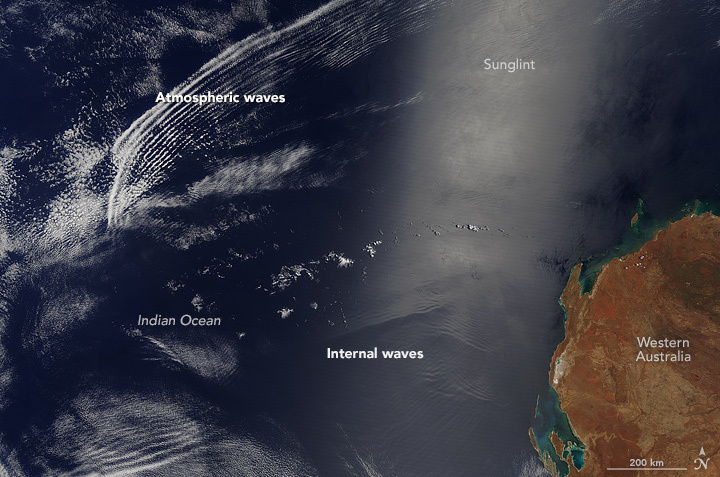
Ocean internal waves are waves in the interior of the ocean, the existence of internal waves was first revealed by a Synthetic-Aperture Radar (SAR) image acquired by the US Seasat satellite on September 15, 1978.
The darkness in deep seas and oceans is found around a depth of 200 meters and below. At this depth, there is almost no light (Twilight Zone). Below a depth of 1000 meters, there is no light at all. Human beings are not able to dive more than forty meters without the aid of submarines or special equipment.
"Or (the unbelievers' state) is like the darkness in a deep sea. It is covered by waves, above which are waves, above which are clouds. Darknesses, one above another. If a man stretches out his hand, he cannot see it...." Quran: Chapter 24:Verse 40
How can prophet Muhammad who was living in the 7th century be able to mention internal waves & deep ocean darkness without Synthetic-Aperture Radar (SAR) and submarines?
EXAMPLE 2 - BIG BANG THEORY AND THE EXPANSION OF THE UNIVERSE
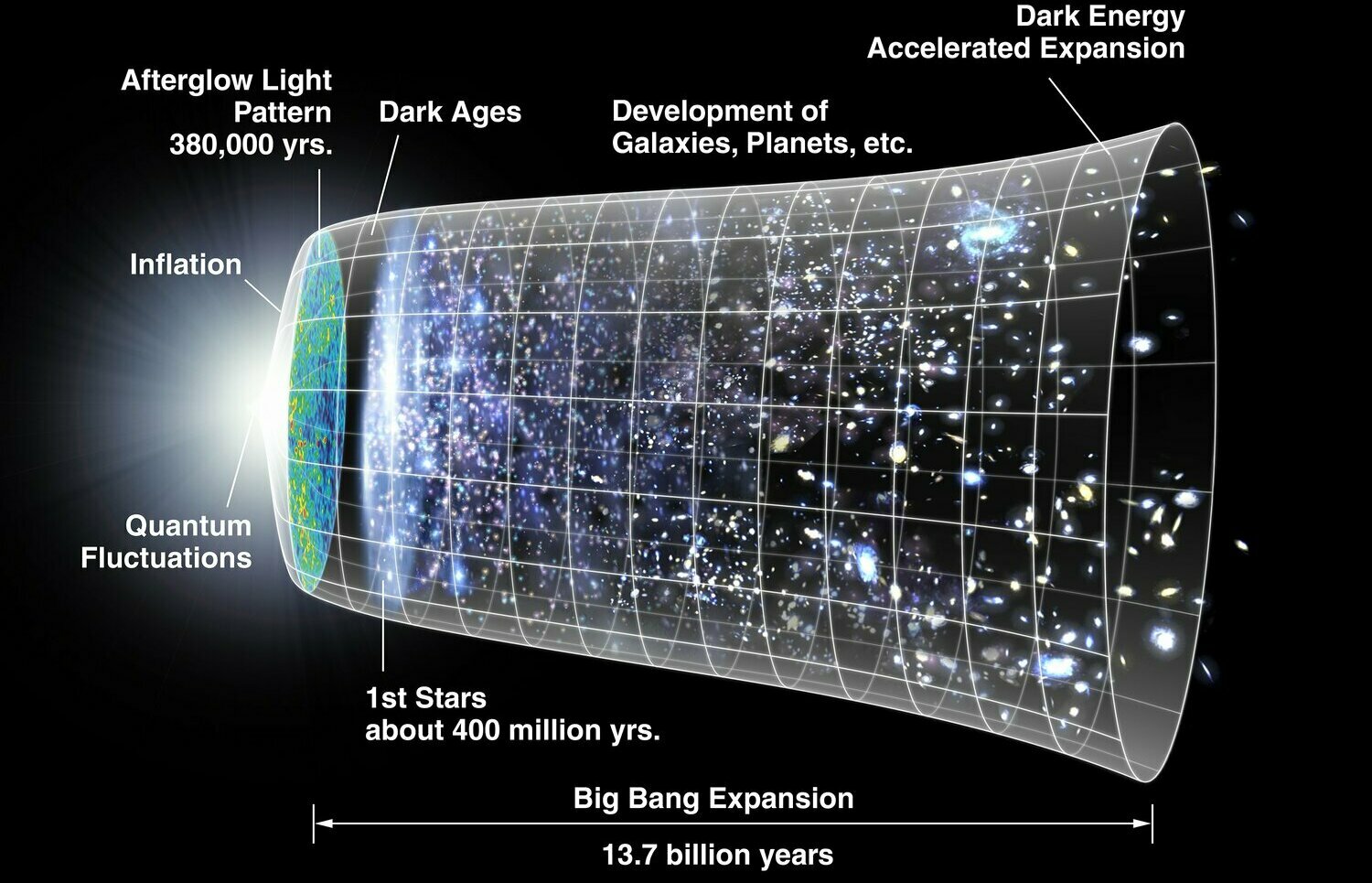
"We constructed the universe with power, and We are expanding it." Quran: Chapter 51:Verse 47
"Do the disbelievers not realize that the heavens and earth were ˹once˺ one mass then We split them apart? And We created from water every living thing. Will they not then believe?" Quran: Chapter 21:Verse 30
Many Muslims find these verses especially striking when read together.
In modern cosmology, one of the most significant discoveries is that the universe is expanding — galaxies are moving away from one another over time. Some scientists also describe the early universe as originating from a single, dense state before expanding outward.
Many Muslims see a meaningful connection between these ideas and the language of these verses. The description of the heavens being “expanded,” along with the imagery of a unified origin that was then separated, is often understood as consistent with modern scientific understanding.
Qur’an 21:30 also draws attention to water as the basis of life. Many believers find this especially meaningful because water is essential for every living organism, and modern biology confirms its central role in life as we know it. In that sense, the verse links cosmic origin and life itself in a way that invites reflection.
At the same time, classical scholars interpreted these verses in broader ways. The expansion was often understood as a sign of Allah’s power and vastness, while the “joining and separation” of the heavens and earth was explained in terms of creation, rain, and the emergence of life.
Because of this, these verses are best understood not as technical scientific statements, but as signs that many believers find deeply meaningful — especially when reflected on in light of modern knowledge.
EXAMPLE 3 - HUMAN EMBRYONIC DEVELOPMENT
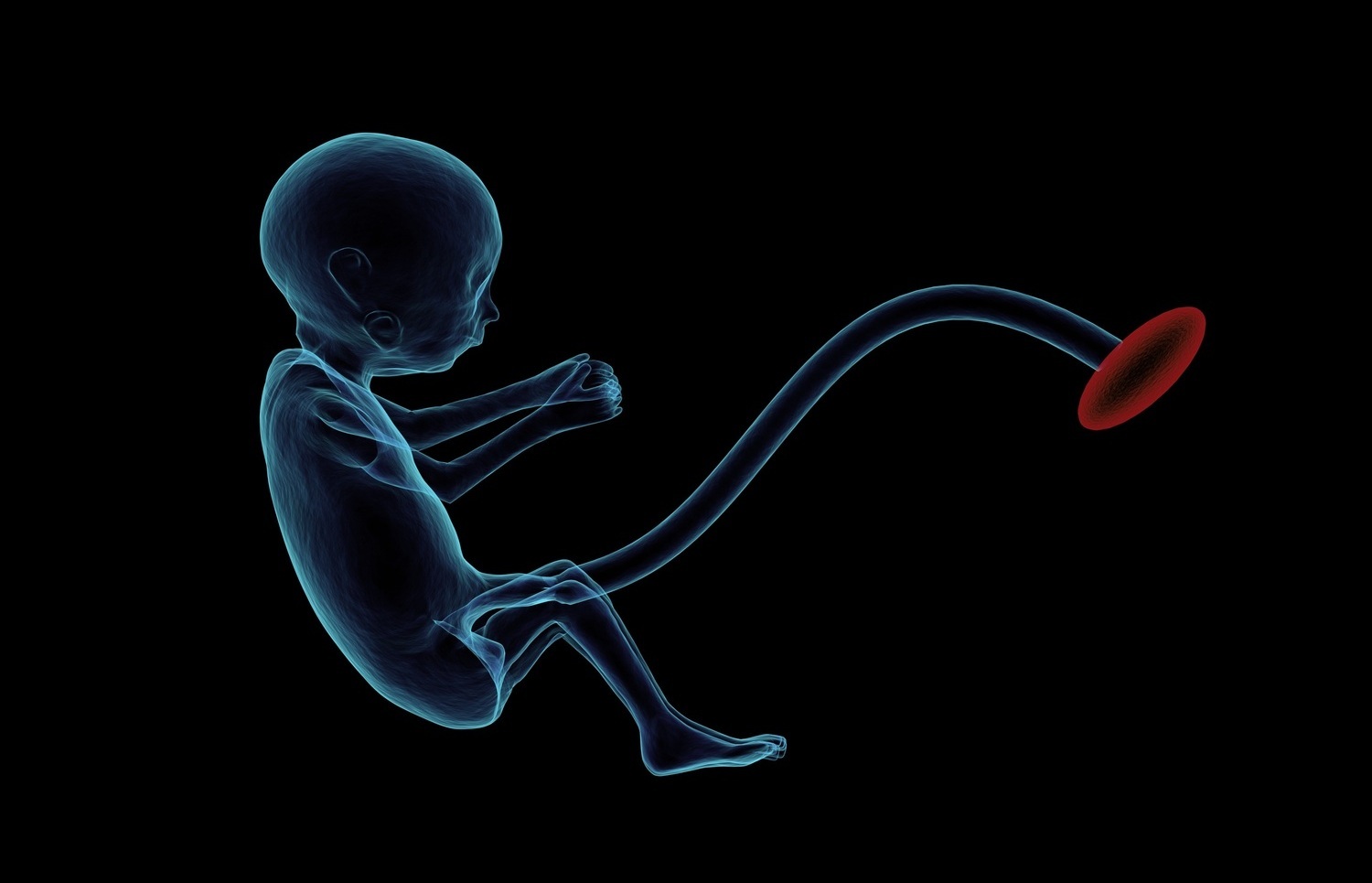
The Quran describes human life as unfolding through distinct stages. It begins with a small drop, then a clinging form, then a lump of flesh, and then further development in the womb.
"O humanity! If you are in doubt about the Resurrection, then ˹know that˺ We did create you from dust, then from a sperm-drop, then ˹developed you into˺ a clinging clot ˹of blood˺, then a lump of flesh - fully formed or unformed - in order to demonstrate ˹Our power˺ to you. ˹Then˺ We settle whatever ˹embryo˺ We will in the womb for an appointed term, then bring you forth as infants, so that you may reach your prime. Some of you ˹may˺ die ˹young˺, while others are left to reach the most feeble stage of life so that they may know nothing after having known much. And you see the earth lifeless, but as soon as We send down rain upon it, it begins to stir ˹to life˺ and swell, producing every type of pleasant plant." Quran: Chapter 22:Verse 5
Many Muslims see this sequence as remarkably consistent with what is known today about human embryonic development. They find it significant that the Quran refers to stages of growth and formation in a way that invites reflection on the complexity of human life.
Some modern scholars, including Professor Keith L. Moore, have commented on similarities between Quranic descriptions and embryology.
Others, however, understand these verses more broadly. In that reading, the verses emphasize Allah’s power to create and reshape life, rather than giving a detailed scientific account. Because of that, this example is often seen as a sign that inspires reflection rather than as a proof-text that settles the discussion once and for all.
This YouTube Video is a recorded lecture for Prof. Keith L. Moore explaining his studies in detail.
EXAMPLE 4 - Iron in the Quran
Iron is one of the most important elements for human civilization. It is used in tools, construction, transportation, and countless forms of technology.
Many Muslims find the phrasing of this verse remarkable. The idea that iron was “sent down” has been interpreted by some as pointing to something beyond ordinary human origin, especially since iron is essential to life and civilization in ways that were not fully understood in earlier eras.
Some readers also note that iron has a special place in the natural world and in the formation of the earth. For believers, this verse is another example of how the Quran draws attention to creation in a way that feels deeper than ordinary language.
As with other verses, interpretations vary. Some see this as a direct sign, while others read it as a powerful way of describing divine provision and benefit.
"And We sent down iron, in which there is great military might and benefits for humanity…." Quran: Chapter 57:Verse 22
Why the Prophet Muhammad’s Unlettered Background Matters

Muslims believe that the Prophet Muhammad, peace be upon him, was unlettered and did not claim to be a scientist. He brought the Quran in a society where literacy was limited and where there were no modern scientific tools, telescopes, microscopes, or advanced instruments of observation.
For believers, this is important because the Quran contains language that continues to invite reflection across generations. The argument is not that the Quran is a textbook of science, but that its descriptions of creation, life, and the universe carry a depth that many people believe could not have come from human knowledge alone.
In that sense, the Quran is seen as a miracle in its own right: not because it speaks in the language of laboratories, but because it presents signs that remain meaningful, reflective, and thought-provoking long after the time of revelation.
Why This Topic Is Sometimes Debated
Not everyone interprets these verses in the same way.
Some readers see them as striking connections to modern discoveries. Others view them as broad, poetic, or spiritually rich descriptions that can be appreciated without turning them into precise scientific claims.
Because of this, the idea of “scientific miracles” in the Qur’an is sometimes discussed and debated. That does not make the verses less meaningful. It simply shows that the Qur’an invites reflection at more than one level.
For many Muslims, that openness is part of the Qur’an’s strength.
Want to Learn More About Islam?
The Quran repeatedly calls people to think, observe, and reflect. For believers, these signs are not meant to replace faith with forced proof. They are meant to strengthen faith by drawing attention to the wisdom and order present in creation.
Whether a person approaches these verses as a believer, a seeker, or a skeptic, they remain among the Quran’s most fascinating passages — verses that continue to invite thought across time, language, and culture.
If you are exploring Islam and want to understand its core beliefs, or how to become Muslim, read our step-by-step guide here: